Apr 17, 2026
AI-Powered Video Captioning: Boosting Accessibility and Engagement
Explore how AI is transforming video captioning, enhancing accessibility and engagement for diverse audiences with accurate and efficient captions.
Revolutionizing Video Accessibility with AI
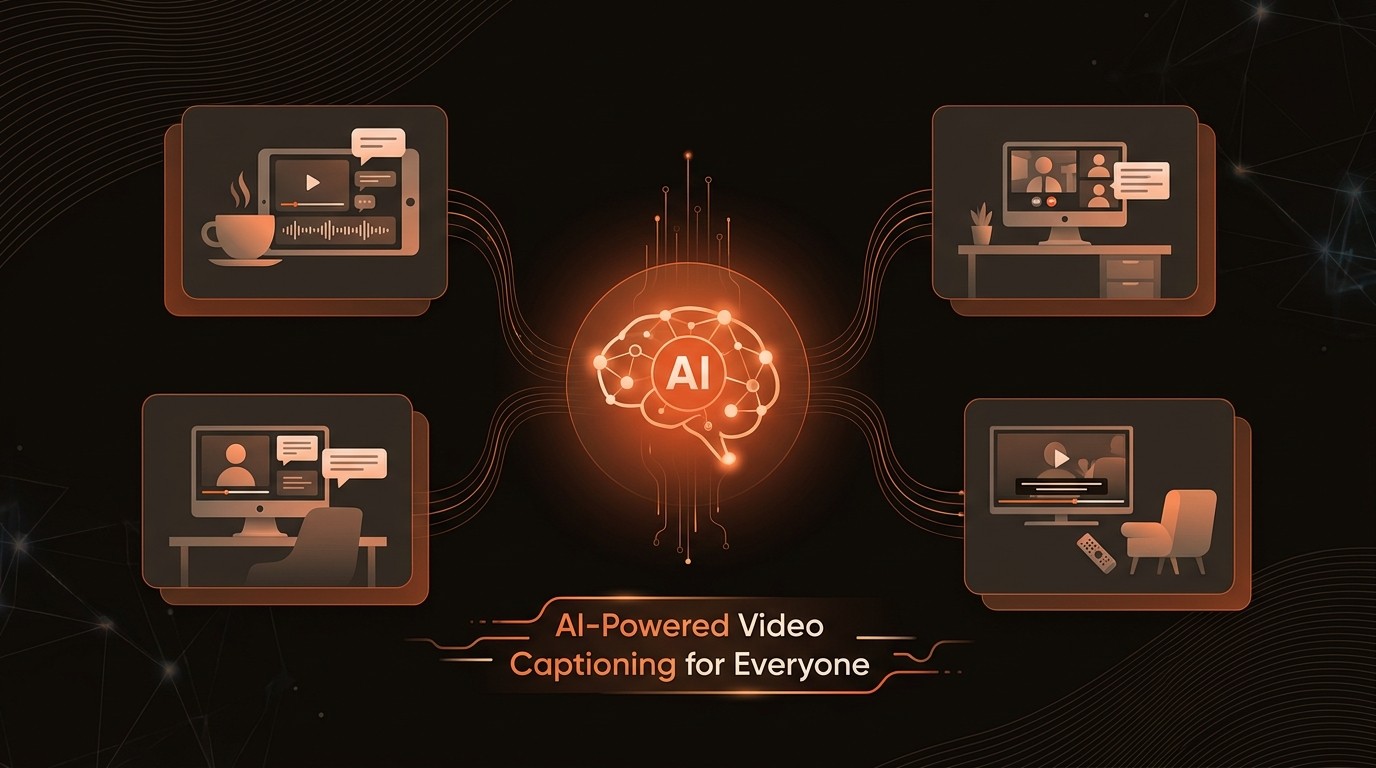
Imagine watching a video in a bustling café, the ambient noise drowning out the audio. Yet, you remain engaged, thanks to the captions that seamlessly narrate the content. This scenario is increasingly common, as AI-powered video captioning becomes a staple in digital media. According to Facebook, videos with captions receive 40% more views. This statistic underscores a growing trend: audiences are gravitating towards content that is accessible and engaging, regardless of their environment.
The core challenge lies in making video content universally accessible. Traditional captioning methods are labor-intensive and time-consuming, often requiring manual transcription. This not only delays content delivery but also limits accessibility for diverse audiences. AI-driven solutions are stepping in to bridge this gap, offering automated, accurate, and efficient captioning services. With 80% of consumers more likely to watch an entire video when captions are available, as reported by Verizon Media, the demand for AI-enhanced captioning is undeniable.
AI's role in video captioning extends beyond mere transcription. It enhances user engagement by making content searchable and improving video SEO rankings. As noted by 3PlayMedia, adding captions can significantly boost a video's SEO performance. This dual benefit of accessibility and discoverability is transforming how content creators, educators, and businesses approach video production. The integration of AI in captioning is not just a technological advancement; it's a strategic move towards inclusivity and audience retention.
Challenges in Traditional Video Captioning
The traditional approach to video captioning presents several challenges that hinder accessibility and engagement. Firstly, manual transcription is a laborious process. It can take hours to transcribe a single video, delaying content release and increasing costs. This inefficiency is a significant barrier for content creators who need to produce timely and relevant material.
Secondly, the accuracy of manual transcription is often compromised by human error. Inconsistent quality can lead to misunderstandings, especially in educational or professional settings where precision is crucial. This inconsistency can alienate audiences who rely on captions for comprehension, such as non-native speakers or individuals with hearing impairments.
Another pain point is the limited scalability of traditional methods. As video content proliferates across platforms, the demand for captions grows exponentially. Manual processes cannot keep pace with this demand, resulting in a backlog of uncaptioned content. This backlog not only affects accessibility but also limits the reach and impact of the content.
Finally, the lack of integration with modern digital platforms poses a challenge. Traditional captioning methods often require separate tools and workflows, complicating the production process. This fragmentation can lead to inefficiencies and increased production times, further exacerbating the challenges faced by content creators and businesses.
Understanding AI-Driven Captioning Technologies
Automatic Speech Recognition (ASR)
Automatic Speech Recognition (ASR) is the backbone of AI-powered video captioning. ASR technology converts spoken language into text by analyzing audio signals. It uses machine learning algorithms to recognize speech patterns and transcribe them accurately. This technology is crucial for generating real-time captions, making it possible to provide immediate accessibility for live broadcasts and events.
Natural Language Processing (NLP)
Natural Language Processing (NLP) enhances the accuracy of captions by understanding context and semantics. NLP algorithms analyze the transcribed text to ensure it aligns with the intended meaning of the spoken words. This contextual understanding is vital for producing captions that are not only accurate but also coherent and meaningful.
Machine Learning Models
Machine learning models play a pivotal role in improving the accuracy and efficiency of video captioning. These models are trained on vast datasets to recognize various accents, dialects, and speech patterns. By continuously learning from new data, these models enhance their transcription capabilities, ensuring high accuracy rates even in challenging audio environments.
Integration with VideoDB
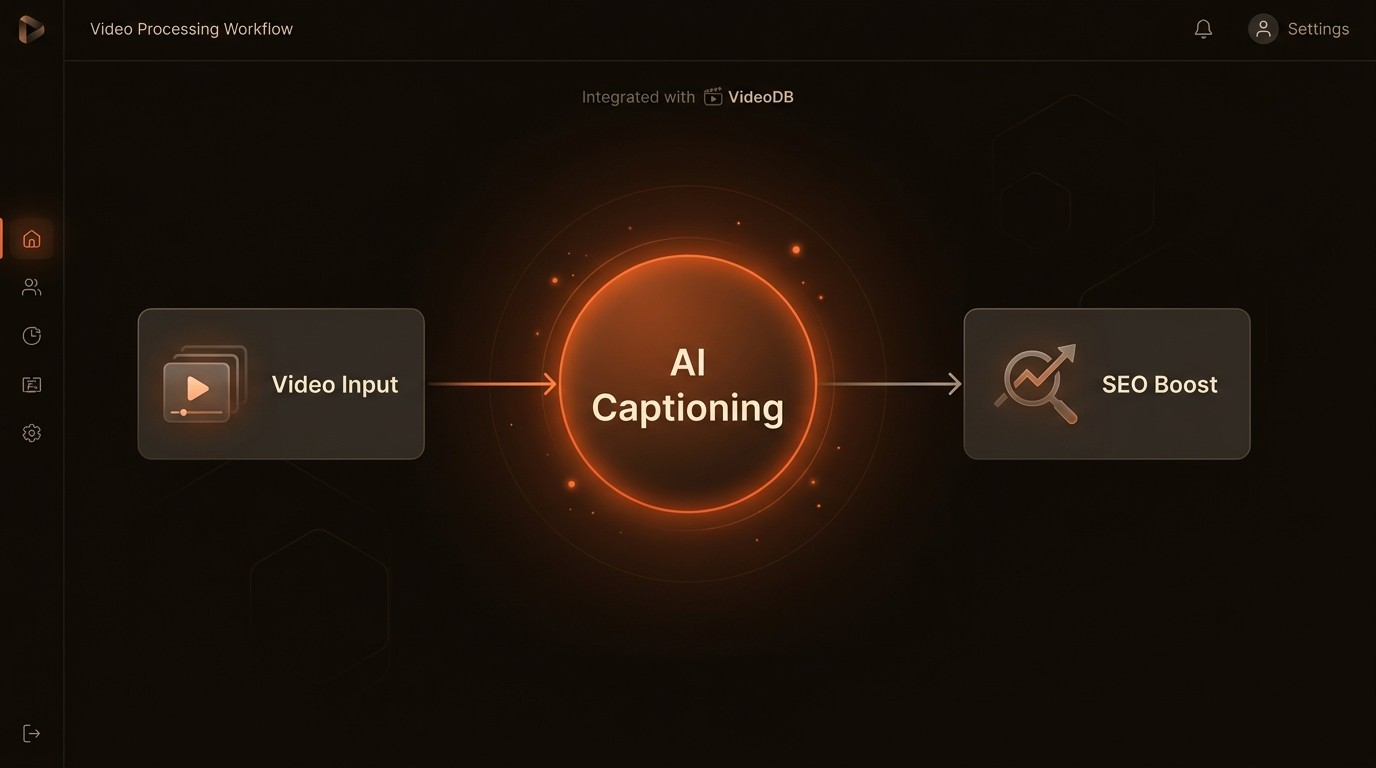
VideoDB is a powerful tool that integrates AI-driven captioning technologies into video production workflows. It offers seamless integration with existing platforms, enabling content creators to automate the captioning process. By leveraging VideoDB, businesses can enhance their video SEO, improve accessibility, and engage wider audiences without the need for extensive manual intervention.
By the Numbers
Here's what the data reveals:
Metric | Current State | Impact |
|---|---|---|
Video views with captions | 40% more views | Increased audience reach |
Consumer engagement | 80% more likely to watch full video | Higher retention rates |
Caption accuracy | 80-90% | Improved comprehension |
Caption usage | 80% of users not hearing impaired | Broader accessibility |
Caption retention | 75% keep captions on | Enhanced user experience |
Unpacking AI's Role in Video Captioning
Real-Time Transcription
AI enables real-time transcription, a game-changer for live events and broadcasts. By leveraging ASR technology, AI can transcribe speech as it happens, providing immediate captions. This capability is invaluable for live streaming platforms and broadcasters who need to ensure accessibility without delay. The benefit is clear: real-time captions enhance viewer engagement and inclusivity, allowing audiences to follow along regardless of their environment.
Enhanced Accuracy
AI-driven captioning systems boast impressive accuracy rates, typically between 80-90%. This level of precision is achieved through advanced machine learning models that continuously learn and adapt to new speech patterns. For content creators, this means fewer errors and a more professional presentation. Accurate captions not only improve comprehension but also enhance the credibility of the content.
Scalability and Efficiency
AI-powered solutions offer unparalleled scalability, allowing content creators to caption vast libraries of videos quickly and efficiently. This scalability is crucial for businesses and educational institutions that produce large volumes of video content. By automating the captioning process, AI reduces the time and resources required, enabling organizations to focus on content creation rather than transcription.
SEO Optimization
Adding captions to videos can significantly boost their SEO rankings. Search engines index captions, making video content more discoverable. This increased visibility translates to higher engagement and reach. For businesses, this means more potential customers and greater brand exposure. By integrating AI-driven captioning with VideoDB, companies can optimize their video content for search engines, enhancing their digital presence.
In Practice
Education Sector
In the education sector, AI-powered video captioning is transforming how lectures and educational content are delivered. Universities and online learning platforms are implementing AI-driven solutions to provide real-time captions for lectures and webinars. This ensures that all students, including those with hearing impairments, have equal access to educational resources. The result is a more inclusive learning environment and improved student outcomes.
Corporate Training
For corporate training, AI-driven captioning enhances the accessibility and effectiveness of training videos. Companies are using AI to automatically generate captions for training modules, ensuring that employees can engage with the content regardless of their location or environment. This approach not only improves comprehension but also increases the retention of training material, leading to more effective workforce development.
Media and Entertainment
In the media and entertainment industry, AI-powered captioning is enhancing viewer engagement and accessibility. Streaming platforms and broadcasters are using AI to provide captions for a wide range of content, from movies to live sports events. This ensures that all viewers, including those who are not native speakers or have hearing impairments, can enjoy the content. The outcome is a broader audience reach and increased viewer satisfaction.
Industry Voices
AI-driven captioning plays a crucial role in improving content accessibility and inclusivity, enabling platforms to reach wider audiences and enhance user engagement.
Getting Started with AI-Powered Captioning
Implementing AI-powered video captioning involves several key steps to ensure a smooth transition and maximize benefits.
Assess Current Needs: Evaluate your current video content and identify areas where captioning can enhance accessibility and engagement. Consider the types of content you produce and the platforms you use to distribute them.
Choose the Right Tools: Select AI-driven captioning tools that integrate seamlessly with your existing workflows. Consider solutions like VideoDB that offer robust features and scalability to meet your needs.
Train Your Team: Ensure that your team is familiar with the new tools and processes. Provide training sessions to help them understand how to use AI-driven captioning effectively and efficiently.
Monitor and Optimize: Continuously monitor the performance of your captioning solutions. Use analytics to track engagement and identify areas for improvement. Optimize your processes based on feedback and performance data.
Expand and Innovate: As you become more comfortable with AI-powered captioning, explore new ways to leverage the technology. Consider expanding your use of captions to new content types or platforms to reach even wider audiences.
FAQ
Q: How does AI improve video captioning accuracy?
A: AI improves accuracy by using machine learning models that continuously learn from new data. These models recognize various speech patterns and accents, ensuring high precision in transcription.
Q: What are the benefits of adding captions to videos?
A: Adding captions enhances accessibility, engagement, and SEO rankings. Captions make content accessible to a broader audience, improve viewer retention, and increase discoverability on search engines.
Q: How does AI-driven captioning impact video SEO?
A: AI-driven captioning boosts video SEO by making content more discoverable. Search engines index captions, improving the visibility and ranking of videos in search results.
Q: Can AI-powered captioning handle multiple languages?
A: Yes, AI-powered captioning can handle multiple languages by using language-specific models. This capability allows content creators to reach global audiences and cater to diverse linguistic needs.
Q: What industries benefit most from AI-powered captioning?
A: Industries such as education, corporate training, and media and entertainment benefit significantly from AI-powered captioning. These sectors rely on video content to engage and educate audiences, making accessibility crucial.
Key Takeaways
AI-powered video captioning enhances accessibility and engagement.
80% of consumers prefer videos with captions, increasing retention.
Video SEO improves with captions, boosting discoverability.
Real-time transcription is crucial for live events and broadcasts.
Scalability allows for efficient captioning of large video libraries.