Apr 17, 2026
AV Generation: AI's Role in Crafting Immersive Audio-Visual Experiences
Explore how AI merges audio and visuals for immersive experiences, transforming media generation with synchronized AV content.
The Future of Immersive Media: AI-Driven AV Generation
Imagine stepping into a virtual world where every sound and visual element is perfectly synchronized, creating an experience so immersive that it blurs the line between reality and digital creation. This is the promise of AV generation, a burgeoning field where artificial intelligence (AI) models are used to create cohesive audio-visual content. According to a 2023 report by Google AI, advancements in deep learning have significantly enhanced the quality and coherence of AI-generated audio and visual content. This technological leap is not just about creating content; it's about crafting experiences that engage users on multiple sensory levels.
The core challenge in AV generation lies in achieving seamless synchronization between audio and visual elements. While traditional content creation often involves separate teams for audio and video, AI models can integrate these elements from the ground up, ensuring that they complement each other perfectly. This capability is particularly transformative for virtual reality (VR) environments, where NVIDIA Research in 2024 highlighted that synchronized AV generation can create more realistic and engaging experiences. As the demand for scalable and cost-effective content creation solutions grows, the role of AI in this domain is set to expand dramatically.
The implications of synchronized AV content extend beyond entertainment. Andrew Ng, Founder of Landing AI, has pointed out that AI's ability to generate synchronized audio-visual content will revolutionize education and training by creating personalized learning experiences. This technology also holds promise for accessibility, as noted by Fei-Fei Li, Professor at Stanford University, who emphasized its potential to create more engaging content for people with disabilities. As we delve deeper into the capabilities and challenges of AV generation, it's clear that this technology is poised to redefine how we interact with digital media.
Challenges in Synchronized AV Generation
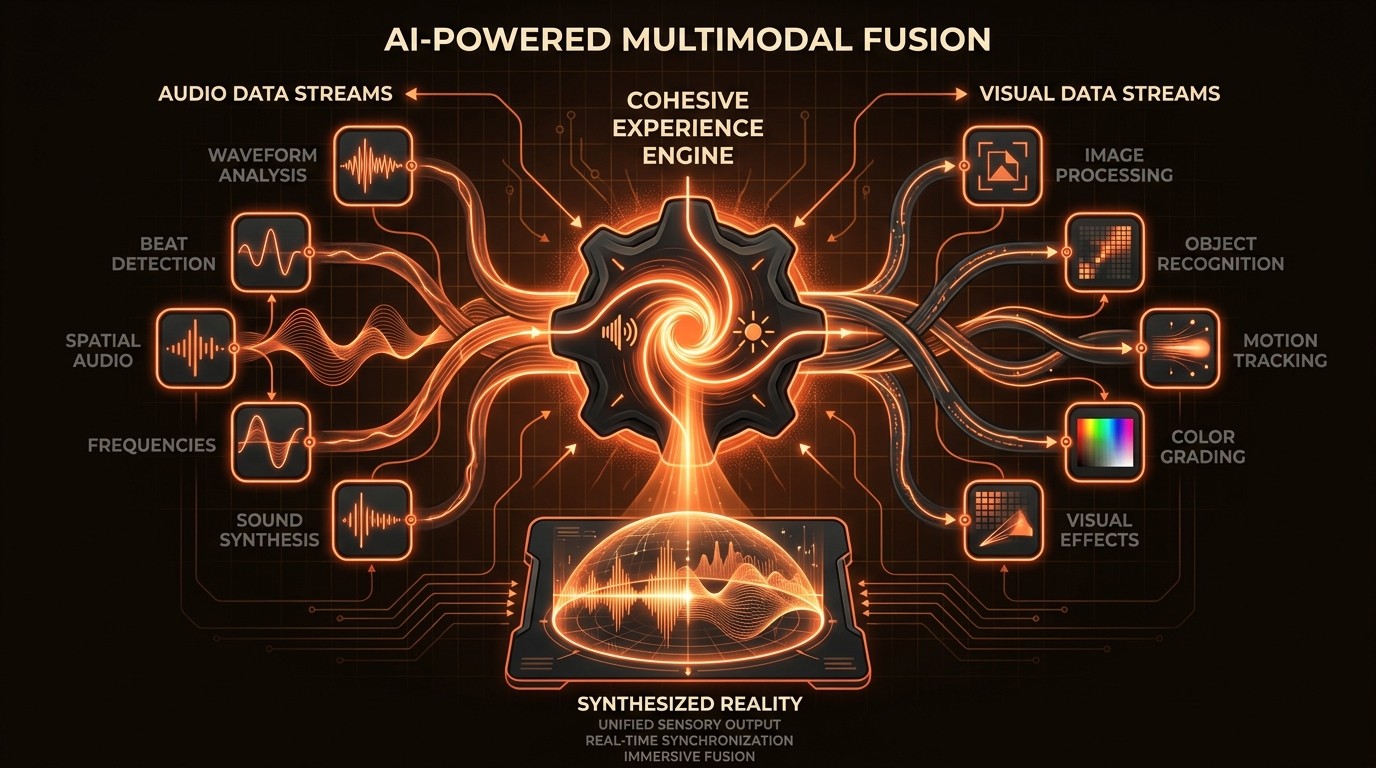
Despite its potential, the field of synchronized AV generation faces several significant challenges. One of the primary issues is the complexity of multimodal learning, which involves training AI models to process and integrate multiple types of data simultaneously. This requires vast amounts of computational power and sophisticated algorithms to ensure that audio and visual elements are not only high-quality but also perfectly aligned. The consequences of failing to achieve this synchronization can result in jarring user experiences that detract from the intended immersion.
Another challenge is the personalization of content. While generative models have made strides in creating tailored audio-visual experiences, as reported by MIT Technology Review in 2025, achieving true personalization requires understanding individual user preferences at a granular level. This involves not only collecting and analyzing user data but also ensuring privacy and ethical considerations are met. The failure to address these concerns can lead to user distrust and potential regulatory issues.
Scalability is also a significant hurdle. As Forrester predicts a substantial increase in demand for AI-generated content by 2025, the ability to scale these technologies efficiently is crucial. This involves optimizing algorithms to handle large volumes of data without compromising on quality or coherence. The inability to scale effectively can lead to bottlenecks in content production, limiting the technology's potential impact.
Finally, there is the challenge of integrating AI-generated content into existing workflows. Many industries rely on established processes for content creation, and introducing AI into these workflows requires careful planning and execution. This includes training staff to work with new technologies and ensuring that AI-generated content meets industry standards. Failure to integrate effectively can result in resistance from stakeholders and a slower adoption rate.
Understanding the Technology Behind AV Generation
Deep Learning and Generative Models
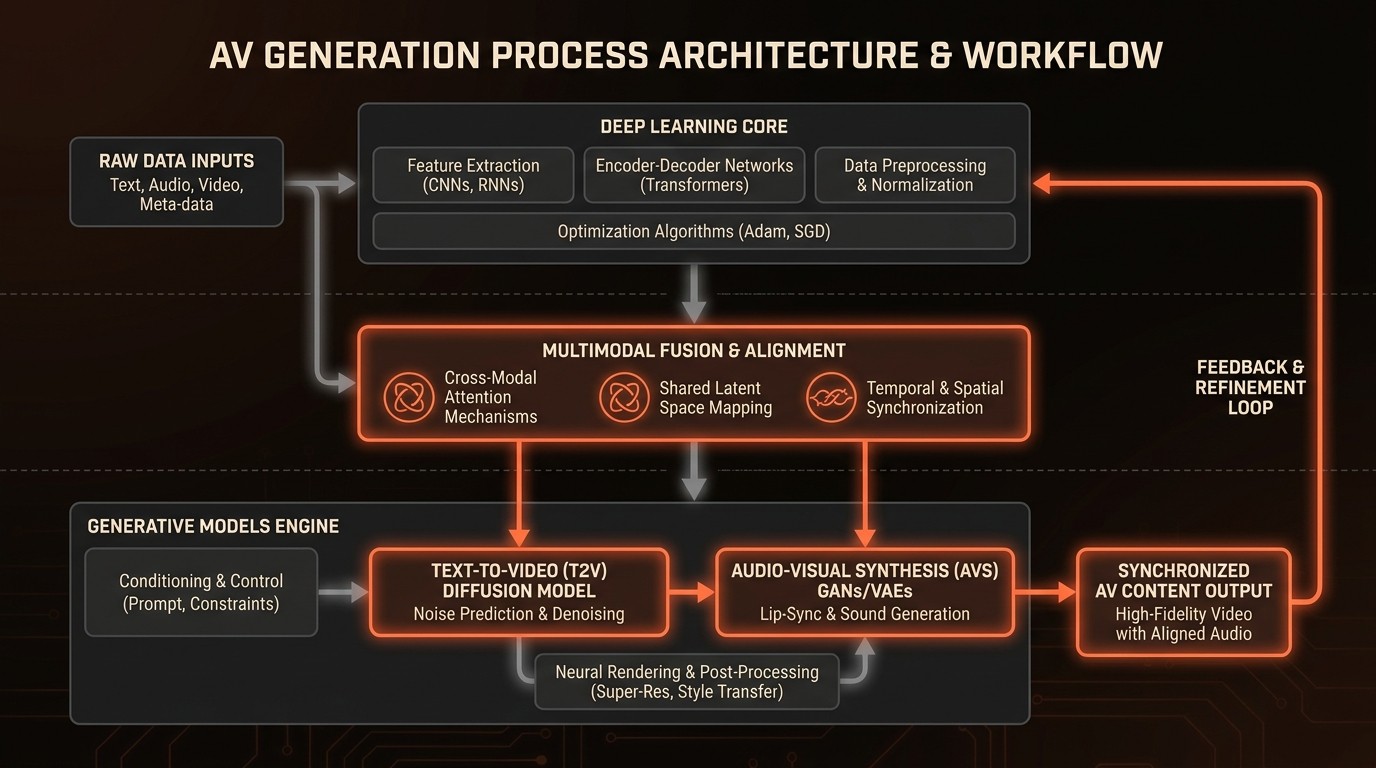
At the heart of AV generation are deep learning and generative models. Deep learning involves neural networks with multiple layers that can learn complex patterns from data. These models are trained on vast datasets of audio and visual content, allowing them to generate new content that mimics the patterns they have learned. Generative models, such as Generative Adversarial Networks (GANs), are particularly effective in creating realistic audio-visual content by pitting two neural networks against each other to improve the quality of the output.
Multimodal Learning
Multimodal learning is a critical component of synchronized AV generation. It involves training AI models to process and integrate data from multiple modalities, such as audio and video, to create a cohesive output. This requires sophisticated algorithms that can understand the relationships between different types of data and ensure that they are synchronized. The complexity of this task is compounded by the need to process large volumes of data in real-time, which requires significant computational resources.
Audio Signal Processing
Audio signal processing is another essential aspect of AV generation. This involves analyzing and manipulating audio signals to enhance their quality and ensure they align with visual elements. Techniques such as noise reduction, echo cancellation, and equalization are used to improve the clarity and coherence of audio content. These processes are crucial for creating immersive experiences, as poor audio quality can significantly detract from the overall experience.
Integration with Existing Systems
Integrating AI-generated content into existing systems is a complex task that requires careful planning and execution. This involves ensuring that AI models are compatible with existing software and hardware, as well as training staff to work with new technologies. Tools like VideoDB can facilitate this integration by providing a platform for managing and organizing AI-generated content. By streamlining the integration process, organizations can more effectively leverage the benefits of AV generation.
By the Numbers
Here's what the data reveals:
Metric | Current State | Impact |
|---|---|---|
AI-generated content demand | Growing significantly | Increased need for scalable solutions |
User engagement with AV content | Improved | Higher retention rates |
Personalization of content | Advanced | Tailored user experiences |
Virtual reality enhancement | Enhanced | More realistic environments |
Deep learning advancements | Significant | Higher quality content |
Unveiling the Capabilities of AV Generation
Enhanced User Engagement
One of the most significant capabilities of AV generation is its ability to enhance user engagement. By creating synchronized audio-visual content, AI models can craft experiences that captivate users and hold their attention longer. For instance, in virtual reality environments, synchronized AV content can create more immersive and realistic experiences, leading to higher user retention rates. According to Stanford University research in 2024, synchronized AV content improves user engagement compared to unimodal content, making it a valuable tool for content creators.
Personalized Content Creation
Generative models are increasingly being used to create personalized audio-visual content tailored to individual preferences. This involves analyzing user data to understand their preferences and using this information to generate content that resonates with them. For example, a streaming service could use AI to create personalized movie trailers that highlight scenes and music that align with a user's tastes. This level of personalization can lead to increased user satisfaction and loyalty, as users feel that the content is specifically designed for them.
Cost-Effective Content Production
The demand for scalable and cost-effective content creation solutions is driving the adoption of AI-generated content. By automating the content creation process, AI models can significantly reduce the time and resources required to produce high-quality audio-visual content. This is particularly beneficial for industries such as advertising and entertainment, where the ability to quickly produce engaging content can provide a competitive advantage. As Forrester predicts, the demand for AI-generated content is expected to grow significantly in the coming years, highlighting the importance of cost-effective production methods.
Integration with Virtual Reality
Synchronized AV generation is playing a crucial role in enhancing virtual reality experiences. By creating more realistic and engaging environments, AI-generated content can elevate the quality of VR applications. For instance, in a VR training simulation, synchronized audio and visuals can create a more immersive learning environment, improving the effectiveness of the training. NVIDIA Research in 2024 emphasized the potential of synchronized AV generation to enhance VR experiences, making it a valuable tool for industries such as education and healthcare.
In Practice: Real-World Applications of AV Generation
Education and Training
In the education sector, AV generation is being used to create personalized learning experiences that cater to individual student needs. For example, an online learning platform could use AI to generate customized video lessons that incorporate both audio and visual elements tailored to a student's learning style. This approach not only enhances engagement but also improves learning outcomes, as students receive content that is specifically designed to meet their needs. According to Andrew Ng, this technology has the potential to revolutionize education by providing more effective and personalized learning experiences.
Entertainment and Media
The entertainment industry is leveraging AV generation to create more immersive and engaging content. For instance, film studios can use AI to generate realistic special effects that seamlessly integrate with live-action footage. This capability allows filmmakers to create more visually stunning movies without the need for expensive and time-consuming manual effects work. The result is a more efficient production process and higher-quality content that captivates audiences.
Accessibility and Inclusion
AV generation is also being used to create more accessible content for people with disabilities. For example, AI can be used to generate audio descriptions for visually impaired users, ensuring that they can fully engage with visual content. Similarly, AI-generated subtitles can improve accessibility for hearing-impaired users. Fei-Fei Li highlighted the potential of this technology to create more inclusive content, making digital media more accessible to a wider audience.
Industry Voices
Andrew Ng, Founder of Landing AI, has frequently discussed the transformative potential of AI in education, particularly its ability to enable personalized and scalable learning experiences.
Fei-Fei Li, Professor at Stanford University, has emphasized the importance of human-centered AI, highlighting how advances in multimodal technologies can improve accessibility and create more inclusive and engaging digital experiences.
Getting Started with AV Generation
Implementing AV generation technology requires a strategic approach to ensure successful integration and adoption. Here are five steps to get started:
Audit Current Workflows: Begin by evaluating your existing content creation processes to identify areas where AI can add value. This involves mapping out current workflows, identifying bottlenecks, and assessing the potential impact of AI integration.
Select the Right Tools: Choose AI tools and platforms that align with your organization's needs and goals. Consider factors such as ease of integration, scalability, and support for multimodal learning. VideoDB can be a valuable resource for managing AI-generated content.
Train Your Team: Ensure that your team is equipped with the necessary skills to work with AI technologies. This may involve providing training on new tools and processes, as well as fostering a culture of innovation and experimentation.
Pilot and Iterate: Start with a pilot project to test the effectiveness of AV generation in your organization. Use this opportunity to gather feedback, identify challenges, and refine your approach before scaling up.
Measure and Optimize: Continuously monitor the performance of your AI-generated content to ensure it meets your organization's goals. Use data-driven insights to optimize your processes and improve the quality and impact of your content.
FAQ
Q: What is AV generation?
A: AV generation refers to the use of AI models to create synchronized audio-visual content. This technology integrates audio and visual elements to produce cohesive and immersive experiences.
Q: How does AV generation enhance virtual reality experiences?
A: By synchronizing audio and visual elements, AV generation creates more realistic and engaging VR environments. This enhances user immersion and improves the overall quality of VR applications.
Q: What are the benefits of personalized AV content?
A: Personalized AV content is tailored to individual user preferences, leading to higher engagement and satisfaction. It allows content creators to deliver experiences that resonate with users on a personal level.
Q: How can AV generation improve accessibility?
A: AV generation can create more accessible content by generating audio descriptions and subtitles for users with disabilities. This ensures that digital media is inclusive and accessible to a wider audience.
Q: What are the challenges of implementing AV generation?
A: Challenges include achieving seamless synchronization, ensuring personalization, scaling efficiently, and integrating AI into existing workflows. Addressing these challenges is crucial for successful implementation.
Key Takeaways
AV generation merges audio and visuals for immersive experiences.
Deep learning advancements enhance content quality and coherence.
Personalization leads to higher user engagement and satisfaction.
Scalability is crucial for meeting growing content demand.
Accessibility is improved through AI-generated descriptions and subtitles.