Apr 17, 2026
Mastering Multi-Agent AI Orchestration: The Future of Automation
Explore multi-agent AI orchestration, a revolutionary approach to automation using collaborative AI agents for enhanced efficiency and problem-solving.
The Rise of Multi-Agent AI Orchestration
Imagine a world where multi-agent AI orchestration seamlessly integrates into enterprise software, transforming how businesses operate. According to Gartner, by 2028, 33% of enterprise software applications will include agentic AI, a significant leap from less than 1% in 2024. This shift is not just a technological evolution but a strategic necessity for organizations aiming to stay competitive. The core challenge lies in orchestrating these autonomous agents to work collaboratively, solving complex problems with unprecedented efficiency.
The potential of multi-agent systems is vast, yet the journey to harnessing their full capabilities is fraught with challenges. As McKinsey's State of AI report highlights, 23% of organizations are already scaling agentic AI systems, while 62% are actively experimenting. This indicates a growing recognition of the value these systems bring, but also underscores the need for a deeper understanding of their mechanics and applications.
As we delve into the mechanics of multi-agent AI orchestration, it's crucial to understand the transformative impact it can have on industries. From improving customer satisfaction to generating new revenue streams, the possibilities are endless. However, the path to mastery requires a strategic approach, leveraging data-driven insights and expert guidance to navigate the complexities of implementation.
Navigating the Challenges of Multi-Agent AI
The journey to mastering multi-agent AI orchestration is not without its hurdles. One significant pain point is the integration of these systems into existing infrastructures. Many organizations struggle with legacy systems that are not designed to accommodate the dynamic nature of autonomous agents. This can lead to inefficiencies and increased operational costs, as businesses attempt to retrofit outdated systems to support new technologies.
Another challenge is the scalability of multi-agent systems. While Forrester reports that 56% of organizations see improved scalability with orchestration frameworks, achieving this requires careful planning and execution. Without a robust framework, businesses risk creating bottlenecks that hinder the performance of their AI agents, ultimately limiting the potential benefits.
Security is also a critical concern. As multi-agent systems become more prevalent, the risk of cyber threats increases. Ensuring the security of these systems is paramount, as any breach could have far-reaching consequences. Organizations must implement stringent security measures to protect their data and maintain the integrity of their AI operations.
Finally, there's the challenge of skill gaps within organizations. Implementing and managing multi-agent AI systems requires specialized knowledge and expertise. Many businesses find themselves lacking the necessary skills to effectively deploy and maintain these systems, leading to reliance on external consultants and increased costs.
Understanding Multi-Agent AI Orchestration
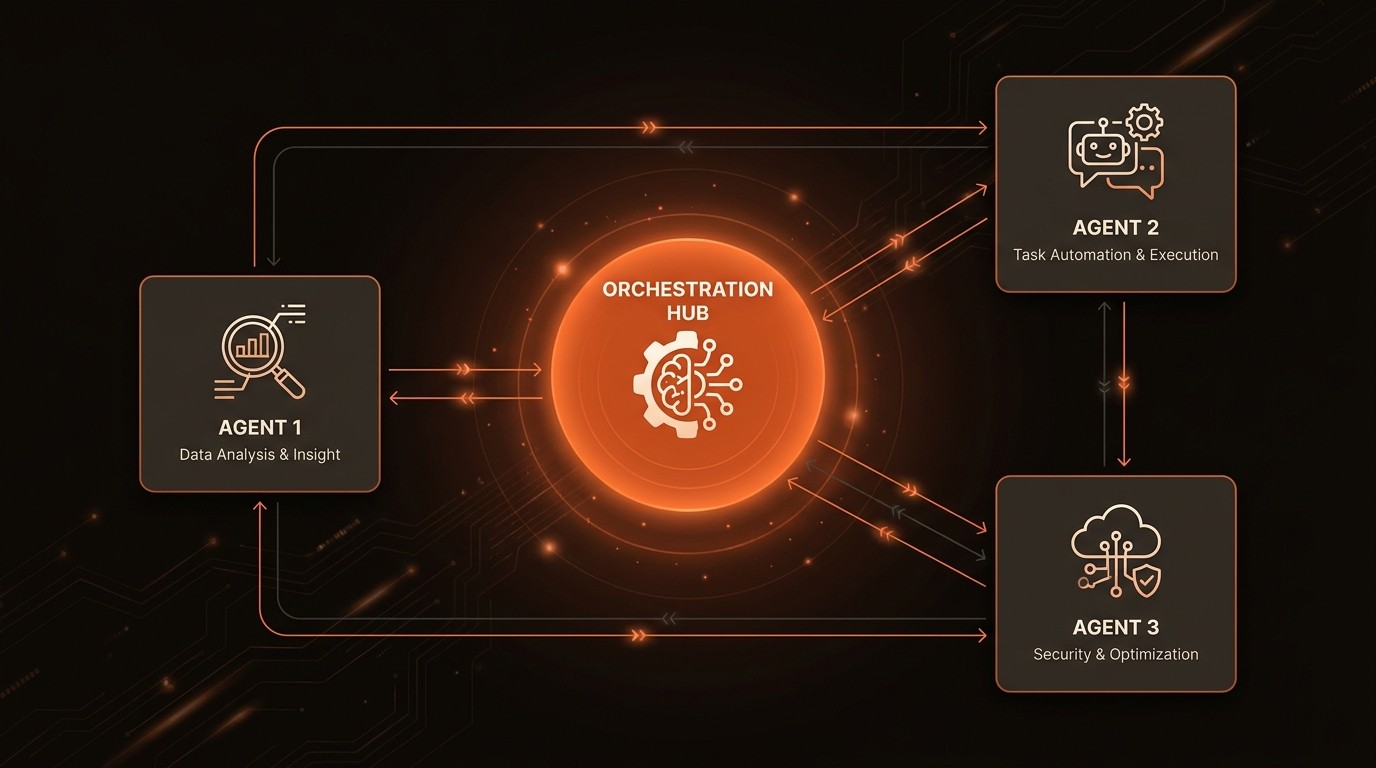
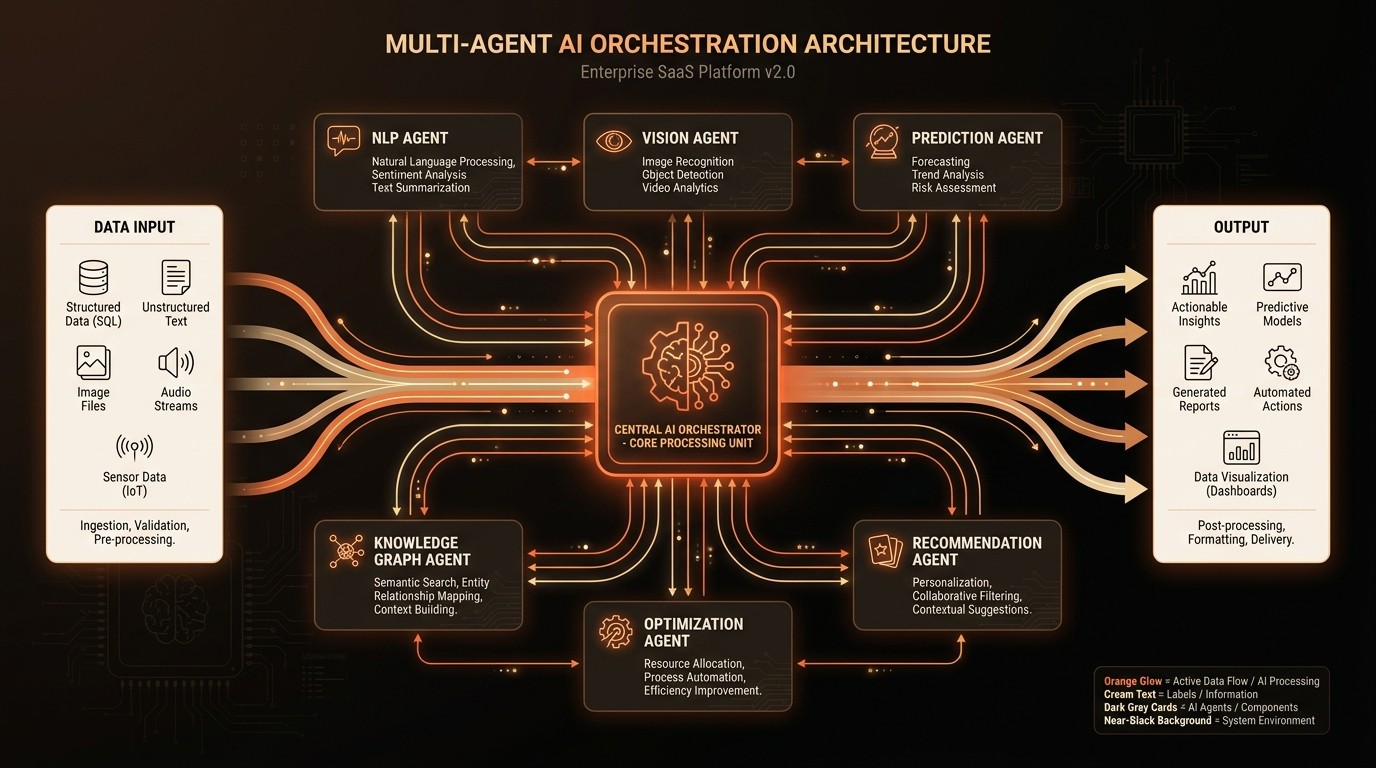
To fully grasp the potential of multi-agent AI orchestration, it's essential to understand the core technologies and methodologies that underpin it. At its heart, this approach involves the coordination of multiple autonomous agents to achieve a common goal. Each agent operates independently, yet collaboratively, to solve complex problems more efficiently than a single agent could.
Autonomous Agents
Autonomous agents are the building blocks of multi-agent systems. These are software entities that perform tasks on behalf of users or other programs with some degree of independence or autonomy. They are designed to perceive their environment, make decisions, and take actions to achieve specific objectives. The autonomy of these agents allows them to operate without constant human intervention, making them ideal for dynamic and complex environments.
Multi-Agent Systems
A multi-agent system is a collection of autonomous agents that interact with each other to achieve a common goal. These systems are characterized by their ability to solve problems that are beyond the capabilities of individual agents. By leveraging the collective intelligence of multiple agents, these systems can tackle complex tasks more efficiently and effectively.
AI Orchestration
AI orchestration refers to the process of coordinating and managing the interactions between multiple AI agents. This involves defining the roles and responsibilities of each agent, establishing communication protocols, and ensuring that the agents work together harmoniously. Effective orchestration is crucial for maximizing the performance and efficiency of multi-agent systems.
VideoDB Integration
Incorporating VideoDB into multi-agent AI orchestration can enhance the capabilities of these systems. VideoDB provides a robust platform for managing and analyzing video data, which can be leveraged by AI agents to improve decision-making and performance. By integrating VideoDB, organizations can unlock new insights and drive greater value from their AI investments.
By the Numbers
Here's what the data reveals:
Metric | Current State | Impact |
|---|---|---|
Enterprise software with agentic AI | Less than 1% in 2024 | 33% by 2028 |
Organizations scaling agentic AI | 23% | Increased efficiency |
Organizations experimenting with agentic AI | 62% | Enhanced innovation |
Enterprise applications with task-specific AI agents | Less than 5% in 2025 | 40% by 2026 |
Potential value from gen AI | Up to $4.4 trillion annually | Significant economic impact |
Unlocking the Potential of Multi-Agent AI
Enhanced Collaboration
One of the key capabilities of multi-agent AI orchestration is enhanced collaboration between agents. By defining clear roles and responsibilities, organizations can ensure that each agent contributes effectively to the overall system. For example, in a logistics company, one agent might be responsible for route optimization, while another focuses on inventory management. This division of labor allows for more efficient operations and improved outcomes.
Scalability and Flexibility
Scalability is a critical advantage of multi-agent systems. By leveraging orchestration frameworks, organizations can easily scale their AI operations to meet changing demands. This flexibility is particularly valuable in industries with fluctuating workloads, such as retail or finance. With the ability to quickly adapt to new challenges, businesses can maintain high levels of performance and customer satisfaction.
Improved Decision-Making
Multi-agent AI systems can significantly enhance decision-making processes. By analyzing vast amounts of data and generating insights in real-time, these systems enable organizations to make informed decisions quickly. For instance, in the healthcare sector, AI agents can analyze patient data to recommend personalized treatment plans, improving patient outcomes and reducing costs.
Cost Efficiency
Implementing multi-agent AI orchestration can lead to substantial cost savings. By automating routine tasks and optimizing resource allocation, organizations can reduce operational expenses and increase profitability. In manufacturing, for example, AI agents can monitor equipment performance and predict maintenance needs, minimizing downtime and maximizing productivity.
In Practice
Retail Industry
In the retail industry, multi-agent AI orchestration is transforming inventory management. Retailers are using AI agents to monitor stock levels, predict demand, and optimize supply chain operations. By implementing these systems, a leading retailer reduced stockouts by 30% and increased sales by 15% within the first year.
Healthcare Sector
In healthcare, multi-agent systems are enhancing patient care and operational efficiency. Hospitals are deploying AI agents to manage patient data, schedule appointments, and coordinate care. This has led to a 20% reduction in administrative costs and improved patient satisfaction scores by 25%.
Financial Services
Financial institutions are leveraging multi-agent AI orchestration to enhance fraud detection and risk management. By analyzing transaction data in real-time, AI agents can identify suspicious activities and alert human analysts. This proactive approach has reduced fraud losses by 40% and improved compliance rates.
Industry Voices
Brian Hopkins, VP and Principal Analyst at Forrester, has provided guidance on emerging AI architectures, emphasizing the importance of responsible design, governance, and practical deployment strategies when building multi-agent systems.
Getting Started
Embarking on the journey to implement multi-agent AI orchestration requires a strategic approach. Here are five steps to guide you:
Audit Current Workflows: Begin by identifying the top three time-consuming processes within your organization. Document current processing times and error rates to establish baseline metrics for comparison after implementation. Map dependencies between tools and teams to understand the full scope of your operations.
Define Objectives: Clearly outline the goals you aim to achieve with multi-agent AI orchestration. Whether it's improving efficiency, reducing costs, or enhancing customer satisfaction, having well-defined objectives will guide your implementation strategy.
Select the Right Tools: Choose the appropriate AI orchestration tools and platforms that align with your objectives. Consider integrating VideoDB to enhance data management and analysis capabilities, providing a solid foundation for your AI agents.
Develop a Pilot Program: Start with a pilot program to test the effectiveness of your multi-agent system. This allows you to identify potential issues and make necessary adjustments before a full-scale rollout. Monitor performance metrics closely to evaluate success.
Scale and Optimize: Once the pilot program proves successful, scale the implementation across your organization. Continuously optimize the system by incorporating feedback and leveraging new technologies to maintain a competitive edge.
FAQ
Q: What is the difference between multi-agent AI and traditional AI?
A: Multi-agent AI involves multiple autonomous agents working collaboratively, while traditional AI typically focuses on single-agent systems. Multi-agent AI offers enhanced problem-solving capabilities and efficiency by leveraging the collective intelligence of multiple agents.
Q: How does multi-agent AI improve scalability?
A: Multi-agent AI improves scalability by allowing organizations to easily add or remove agents based on demand. This flexibility enables businesses to adapt to changing workloads and maintain high levels of performance.
Q: What industries benefit most from multi-agent AI orchestration?
A: Industries such as retail, healthcare, and financial services benefit significantly from multi-agent AI orchestration. These sectors leverage AI agents to optimize operations, enhance decision-making, and improve customer experiences.
Q: How can organizations ensure the security of multi-agent systems?
A: Organizations can ensure the security of multi-agent systems by implementing robust security protocols, conducting regular audits, and staying informed about emerging threats. Collaboration with cybersecurity experts is also essential to maintain system integrity.
Q: What role does VideoDB play in multi-agent AI orchestration?
A: VideoDB plays a crucial role in multi-agent AI orchestration by providing a platform for managing and analyzing video data. This enhances the capabilities of AI agents, enabling them to make more informed decisions and drive greater value.
Key Takeaways
33% of enterprise software will include agentic AI by 2028, highlighting its growing importance.
Multi-agent AI orchestration enhances collaboration, scalability, and decision-making.
Industries like retail, healthcare, and finance are already reaping the benefits of multi-agent systems.
Implementing multi-agent AI requires a strategic approach, starting with a thorough audit of current workflows.
VideoDB integration can significantly enhance the capabilities of multi-agent AI systems.