Apr 17, 2026
Object Detection AI: Seeing the World with Smarter Machines
Explore how object detection AI is transforming industries with smarter vision systems, from warehouses to agriculture, and its future potential.
The Rise of Object Detection AI
Imagine a world where machines can see and understand their surroundings as well as humans do. This is not a distant future but a present reality, thanks to object detection AI. By 2031, enterprise computer vision, which includes object detection, is projected to reach a staggering $386 billion in global revenue, according to Gartner. This technology is not just about identifying objects; it's about transforming industries by enabling machines to perceive and interact with the world in unprecedented ways.
The core challenge lies in the complexity of teaching machines to recognize and locate objects in diverse environments. Traditional methods of object recognition were limited by their reliance on extensive datasets and manual coding. However, advancements in deep learning and neural networks have revolutionized this field, allowing for more accurate and faster object detection. For instance, the YOLO algorithm achieves a detection speed of 45 frames per second with a 63.4% mAP, showcasing the potential for real-time applications.
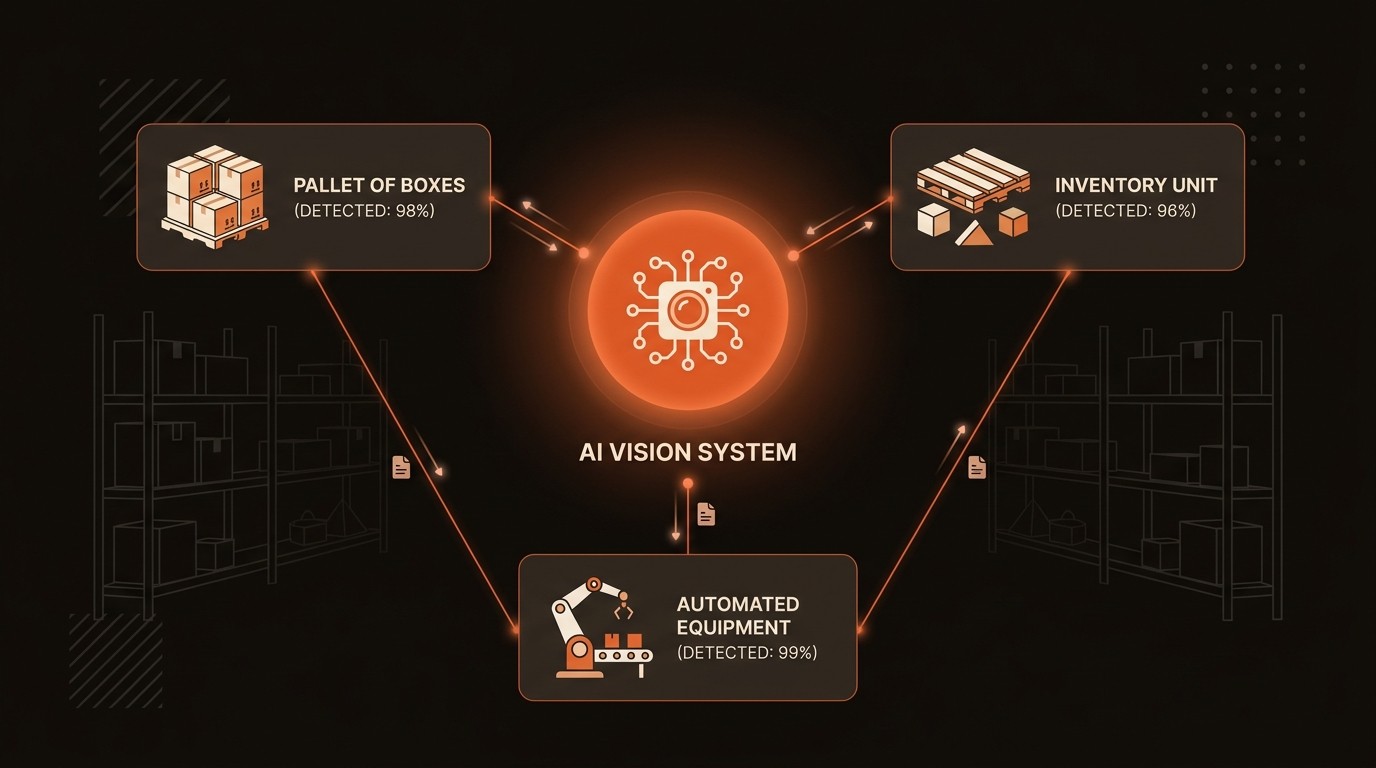
As industries continue to adopt AI-enabled vision systems, the implications are profound. By 2027, AI vision systems are expected to replace traditional barcode-scanning cycle counts for 50% of warehouse operators. This shift not only enhances efficiency but also reduces human error, leading to significant cost savings. The potential for AI in visual inspection is equally promising, with defect detection rates increasing by up to 90% compared to human inspection, as reported by McKinsey.
Challenges in Object Detection
Despite its transformative potential, object detection AI faces several challenges that need addressing. One significant pain point is the requirement for vast amounts of labeled data to train models effectively. This data dependency can be a bottleneck, especially for smaller enterprises that lack the resources to compile extensive datasets. Without sufficient data, the accuracy and reliability of object detection systems can be compromised, leading to suboptimal performance.
Another challenge is the computational power required to process and analyze visual data in real-time. High-performance GPUs and specialized hardware are often necessary to run complex algorithms like YOLO and R-CNN. This requirement can be a barrier for companies with limited budgets, hindering the widespread adoption of AI vision technologies. The cost of upgrading infrastructure to support these systems can be prohibitive, especially for startups and small businesses.
The integration of AI vision systems into existing workflows also presents a challenge. Many industries rely on legacy systems that are not designed to accommodate advanced AI technologies. This incompatibility can lead to disruptions in operations and require significant investment in system upgrades and employee training. The transition to AI-driven processes must be carefully managed to minimize downtime and ensure a smooth implementation.
Finally, there is the issue of accuracy in complex environments. While object detection AI has made significant strides, it can still struggle in crowded or cluttered scenes. For example, iOmniscient has noted that while many companies can perform abandoned object detection, only they can do so effectively in crowded scenes. This limitation highlights the need for continuous improvement and innovation in AI algorithms to handle diverse and challenging scenarios.
Understanding Object Detection Technology
Deep Learning and Neural Networks
At the heart of object detection AI is the use of deep learning and neural networks. These technologies enable machines to learn from vast amounts of data, identifying patterns and features that are indicative of specific objects. Deep learning models, such as convolutional neural networks (CNNs), are particularly effective at processing visual data, allowing for high levels of accuracy in object recognition tasks.
YOLO and R-CNN Algorithms
Two of the most prominent algorithms in object detection are YOLO (You Only Look Once) and R-CNN (Region-based Convolutional Neural Networks). YOLO is known for its speed, capable of processing images at 45 frames per second, making it ideal for real-time applications. R-CNN, on the other hand, excels in accuracy by using a region proposal network to identify potential objects before classification. Both algorithms have their strengths and are chosen based on the specific needs of the application.
Intersection over Union (IoU)
A critical metric in evaluating the performance of object detection models is Intersection over Union (IoU). IoU measures the overlap between the predicted bounding box and the ground truth, providing a quantitative assessment of the model's accuracy. A higher IoU indicates better performance, as it reflects the model's ability to precisely locate objects within an image.
Agentic Object Detection
An emerging concept in the field is agentic object detection, introduced by AI pioneer Andrew Ng. This approach leverages a reasoning agent to detect objects based on a text prompt, reducing the need for extensive training data. By incorporating reasoning capabilities, agentic object detection offers a more flexible and efficient solution for identifying objects in dynamic environments.
By the Numbers
Here's what the data reveals:
Metric | Current State | Impact |
|---|---|---|
Enterprise computer vision revenue | $386 billion by 2031 | Significant growth potential |
AI vision in warehouses | 50% adoption by 2027 | Enhanced efficiency |
Defect detection improvement | Up to 90% | Higher quality control |
YOLO detection speed | 45 fps | Real-time applications |
Herbicide reduction by Blue River | Up to 90% | Sustainable agriculture |
Unpacking Object Detection Capabilities
Real-Time Processing
One of the most significant capabilities of object detection AI is its ability to process visual data in real-time. Algorithms like YOLO are designed to quickly analyze images and identify objects, making them ideal for applications that require immediate feedback. For instance, in autonomous vehicles, real-time object detection is crucial for identifying obstacles and making split-second decisions to ensure passenger safety.
Enhanced Accuracy
Object detection AI has significantly improved the accuracy of visual inspections. By leveraging deep learning models, these systems can identify defects and anomalies with a precision that surpasses human capabilities. In manufacturing, AI-based visual inspection can increase defect detection rates by up to 90%, leading to higher product quality and reduced waste.
Scalability and Flexibility
The scalability of object detection AI allows it to be applied across various industries and use cases. From agriculture to healthcare, these systems can be tailored to meet specific needs. For example, Blue River Technology uses object detection to distinguish weeds from crops, reducing herbicide use by up to 90%. This application not only enhances efficiency but also promotes sustainable farming practices.
Integration with Existing Systems
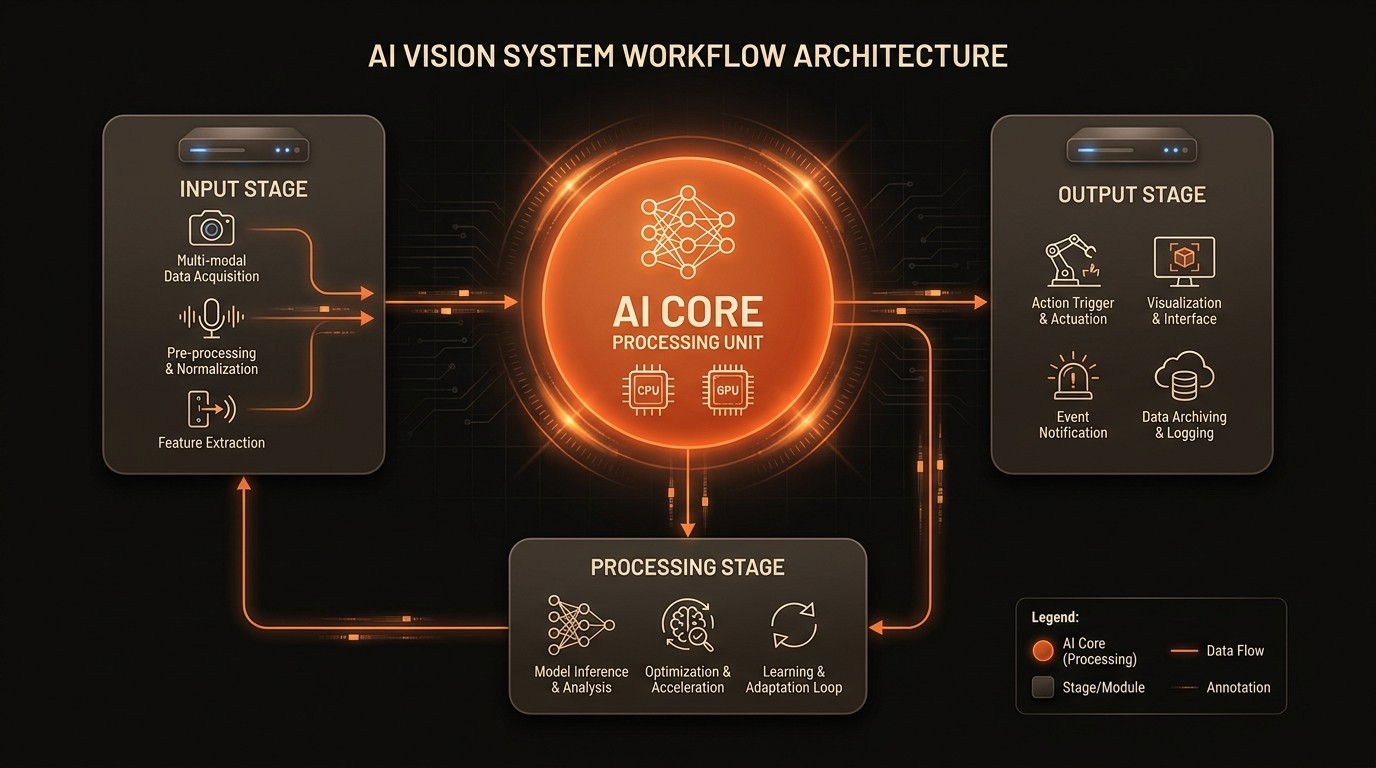
Modern object detection solutions are designed to integrate seamlessly with existing systems, minimizing disruptions during implementation. Technologies like Matroid enable developers to build, test, and deploy computer vision models without writing a single line of code. This ease of integration accelerates the adoption of AI vision systems, allowing businesses to quickly realize the benefits of enhanced image and video recognition.
In Practice
Warehouse Automation
In the logistics industry, object detection AI is revolutionizing warehouse operations. By replacing traditional barcode-scanning cycle counts, AI vision systems streamline inventory management, reducing errors and increasing efficiency. For example, a leading logistics company implemented AI-enabled vision systems, resulting in a 30% reduction in inventory discrepancies and a 20% increase in operational efficiency.
Precision Agriculture
Agriculture is another sector benefiting from object detection AI. Blue River Technology's use of AI to distinguish between crops and weeds has led to a significant reduction in herbicide use, promoting sustainable farming practices. This technology not only reduces costs but also minimizes environmental impact, making agriculture more efficient and eco-friendly.
Healthcare Diagnostics
In healthcare, object detection AI is enhancing diagnostic accuracy. By analyzing medical images, AI systems can identify abnormalities with greater precision than human practitioners. A hospital that integrated AI vision systems into its diagnostic processes reported a 15% increase in early detection rates of diseases, improving patient outcomes and reducing treatment costs.
Industry Voices
Advances in computer vision are increasingly integrating reasoning-based approaches and vision-language models, enabling object detection systems to respond to natural language prompts without relying solely on large labeled datasets.
Erick Brethenoux, a Gartner analyst, has discussed the growing role of automated machine learning (AutoML) and no-code platforms in democratizing AI, allowing developers to build and deploy computer vision models with minimal programming effort.
Getting Started with Object Detection AI
Implementing object detection AI in your organization requires a strategic approach. Here are five steps to get started:
Audit Current Workflows: Begin by identifying the top three time-consuming processes in your organization. Document current processing times and error rates to establish baseline metrics for comparison after implementation. Map dependencies between tools and teams to understand the impact of AI integration.
Select the Right Technology: Choose an object detection solution that aligns with your specific needs. Consider factors such as speed, accuracy, and ease of integration. Technologies like VideoDB offer robust solutions for various industries, providing the flexibility and scalability needed for successful implementation.
Pilot and Test: Conduct a pilot program to test the chosen AI solution in a controlled environment. Monitor performance metrics and gather feedback from users to identify areas for improvement. This step is crucial for refining the system before full-scale deployment.
Train and Educate Staff: Ensure that your team is well-equipped to work with the new technology. Provide training sessions and resources to help employees understand the capabilities and limitations of object detection AI. A knowledgeable workforce is essential for maximizing the benefits of AI integration.
Scale and Optimize: Once the pilot program is successful, scale the implementation across the organization. Continuously monitor performance and optimize the system to adapt to changing needs. Regular updates and maintenance are necessary to keep the AI solution running smoothly and efficiently.
FAQ
Q: What is object detection AI?
A: Object detection AI is a computer vision technology that enables machines to identify and locate objects within images and videos. It uses algorithms like YOLO and R-CNN to process visual data and provide real-time insights.
Q: How does object detection AI differ from image recognition?
A: While both technologies analyze visual data, object detection AI not only identifies objects but also determines their location within an image. Image recognition focuses solely on identifying objects without providing spatial information.
Q: What industries benefit from object detection AI?
A: Industries such as logistics, agriculture, healthcare, and manufacturing benefit from object detection AI. It enhances efficiency, accuracy, and sustainability across various applications, from inventory management to precision farming.
Q: How does YOLO achieve real-time processing?
A: YOLO achieves real-time processing by using a single neural network to predict multiple bounding boxes and class probabilities simultaneously. This approach allows for fast and efficient object detection, making it suitable for applications requiring immediate feedback.
Q: What are the challenges of implementing object detection AI?
A: Challenges include the need for large datasets, high computational power, integration with existing systems, and accuracy in complex environments. Addressing these challenges requires careful planning and investment in the right technology.
Key Takeaways
Object detection AI is transforming industries by enabling machines to perceive and interact with the world.
Enterprise computer vision is projected to reach $386 billion in revenue by 2031.
AI vision systems will replace traditional barcode-scanning for 50% of warehouse operators by 2027.
YOLO achieves a detection speed of 45 fps, ideal for real-time applications.
Agentic object detection offers a flexible solution by reducing the need for extensive training data.