Apr 17, 2026
Mastering AEO: Strategies for AI Answer Engine Optimization
Explore actionable strategies to optimize content for AI answer engines like ChatGPT and Google's AI Overviews, enhancing visibility and trustworthiness.
Navigating the AI Answer Engine Landscape
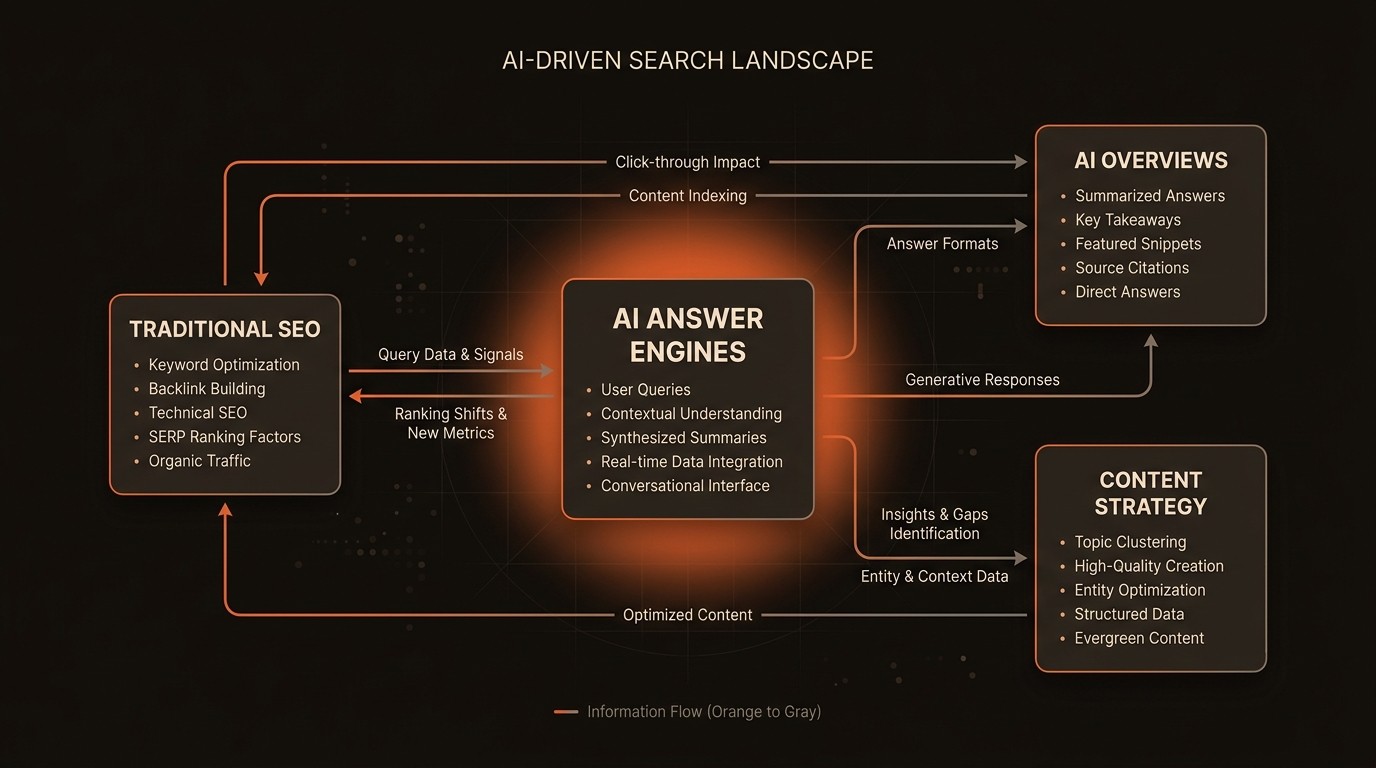
In a world where AI-driven answer engines are handling about 30-40% of search queries, optimizing content for these platforms is no longer optional—it's essential. With AI Overviews appearing in over 13% of all searches, content creators and marketers must adapt to this evolving landscape to maintain visibility and trustworthiness. Traditional SEO remains important, given Google's 90% global search share, but the rise of AI SEO is reshaping how information is accessed and consumed.
The challenge lies in understanding how AI systems like ChatGPT and Google's AI Overviews process and prioritize content. As 60% of Americans turn to AI for information, the need for effective Answer Engine Optimization (AEO) strategies becomes clear. This shift is not just about visibility; it's about ensuring that your content is the trusted source AI platforms choose to present.
To thrive in this new environment, content creators must embrace a hybrid approach that combines AI and human expertise. This strategy not only enhances content relevance but also boosts conversion rates, with AI-powered results converting at 4.4x the rate of traditional search traffic.
The Challenges of AI Answer Engine Optimization
One of the primary challenges in optimizing content for AI answer engines is the information asymmetry between publishers and AI platforms. As Damon Reeve, CEO of Ozone, noted, publishers often lack insight into how their content is consumed by AI systems, leaving them at a disadvantage. This lack of transparency can hinder efforts to tailor content effectively for AI-driven platforms.
Another significant pain point is the decline in traditional search volume, which is expected to drop by 25% by 2026. This shift necessitates a reevaluation of content strategies to ensure they align with the preferences of AI-driven search users. As more consumers rely on AI-improved search, content that fails to adapt risks losing visibility and engagement.
The complexity of schema markup and its implementation poses another hurdle. While schema markup is crucial for helping AI systems understand and categorize content, many content creators struggle with its technical intricacies. Without proper schema implementation, content may not be accurately represented in AI-driven search results, reducing its effectiveness.
Finally, the rapid evolution of generative AI technologies presents a moving target for content optimization. As AI models become more sophisticated, the criteria for content selection and presentation may change, requiring continuous adaptation and learning from content creators. This dynamic environment demands a proactive approach to stay ahead of AI trends and maintain content relevance.
Understanding the Core Technologies Behind AEO
Natural Language Processing (NLP)
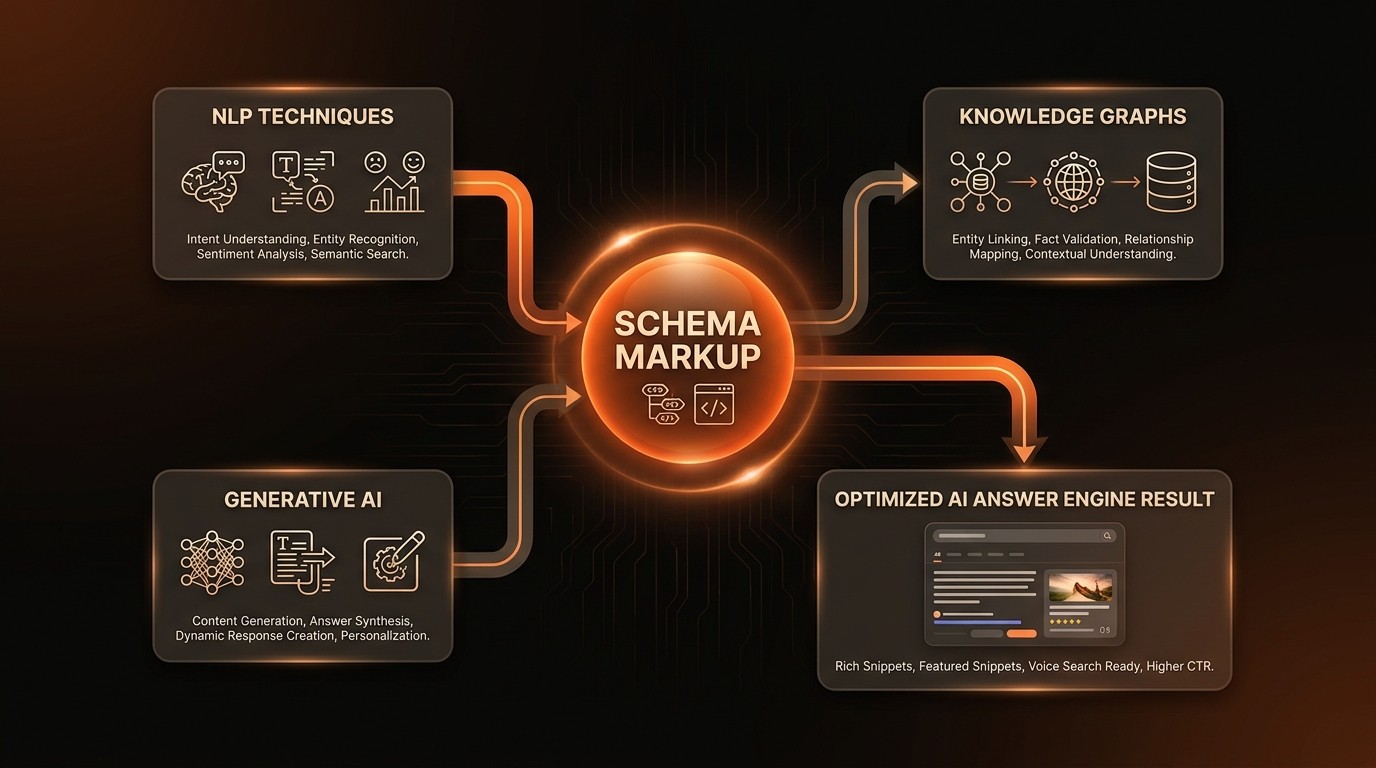
Natural Language Processing is a foundational technology for AI answer engines. It enables machines to understand and interpret human language, allowing AI systems to process queries and deliver relevant answers. NLP involves complex algorithms that analyze syntax, semantics, and context to generate accurate responses. By optimizing content with NLP in mind, creators can enhance their content's compatibility with AI systems.
Schema Markup
Schema markup is a form of microdata that helps AI systems understand the structure and meaning of content. By embedding schema markup into web pages, content creators can provide AI platforms with detailed information about their content, improving its visibility in AI-driven search results. Proper implementation of schema markup can significantly enhance content discoverability and relevance.
Knowledge Graphs
Knowledge Graphs are databases that store structured information about entities and their relationships. AI answer engines leverage knowledge graphs to provide users with comprehensive and contextually relevant answers. By aligning content with knowledge graph data, creators can ensure their content is accurately represented and prioritized by AI systems.
Generative AI
Generative AI refers to AI models capable of creating new content based on existing data. These models are used by AI answer engines to generate responses to user queries. Understanding how generative AI works and tailoring content to align with its capabilities can enhance content visibility and engagement. By leveraging generative AI, content creators can produce dynamic and interactive content that resonates with AI-driven audiences.
By the Numbers
Here's what the data reveals:
Metric | Current State | Impact |
|---|---|---|
Global search share | 90% by Google | Traditional SEO remains crucial |
AI Overviews in searches | 13% | Increased need for AEO |
Americans using AI for info | 60% | Growing reliance on AI platforms |
AI-improved search usage | 79% | Shift towards AI-driven search |
Traditional search volume drop | 25% by 2026 | Necessitates content strategy reevaluation |
Strategies for Effective AEO
Leveraging Schema Markup
Implementing schema markup is a critical strategy for optimizing content for AI answer engines. By providing structured data, schema markup helps AI systems understand the context and relevance of content. For example, a recipe website can use schema markup to highlight ingredients, cooking times, and nutritional information, making it easier for AI platforms to present this data to users. This approach not only improves visibility but also enhances user engagement by delivering precise information.
Enhancing Content with NLP
Incorporating Natural Language Processing techniques into content creation can significantly improve its compatibility with AI systems. By using NLP to analyze and optimize language, tone, and context, content creators can ensure their material aligns with AI-driven search criteria. For instance, a travel blog can use NLP to tailor content for specific destinations, enhancing its relevance and appeal to AI platforms.
Aligning with Knowledge Graphs
Aligning content with Knowledge Graphs is essential for ensuring accurate representation in AI-driven search results. By understanding the relationships between entities and incorporating this knowledge into content, creators can enhance its contextual relevance. For example, a tech company can align its product descriptions with knowledge graph data to improve visibility and credibility in AI-generated search results.
Adapting to Generative AI
Adapting content strategies to leverage Generative AI can enhance engagement and visibility. By creating dynamic and interactive content that resonates with AI-driven audiences, creators can improve their content's appeal and effectiveness. For instance, a fashion brand can use generative AI to create personalized style recommendations, increasing user interaction and satisfaction.
In Practice
E-commerce Optimization
In the e-commerce industry, optimizing product descriptions with schema markup can significantly enhance visibility in AI-driven search results. By providing detailed product information, such as price, availability, and reviews, e-commerce platforms can improve their chances of being featured in AI-generated search results. This approach not only increases visibility but also boosts conversion rates by providing users with comprehensive product information.
Healthcare Information Delivery
In the healthcare sector, leveraging NLP to optimize medical content can improve its relevance and accuracy in AI-driven search results. By tailoring content to align with AI search criteria, healthcare providers can ensure their information is accurately represented and easily accessible to users. This strategy enhances patient engagement and trust by delivering reliable and relevant medical information.
Educational Content Enhancement
In the education industry, aligning content with knowledge graphs can enhance its visibility and credibility in AI-driven search results. By incorporating structured data and aligning content with educational standards, institutions can improve their content's appeal and effectiveness. This approach not only increases visibility but also enhances user engagement by providing accurate and relevant educational information.
Industry Voices
Publishers and platforms are increasingly highlighting the information asymmetry between content creators and AI systems, where limited visibility into how content is ingested and used by large language models creates challenges around control, attribution, and value capture.
Organizations are also adopting hybrid workflows that combine AI capabilities with human expertise, particularly when optimizing content for AI-driven search and answer engines, ensuring both scalability and quality in content generation and optimization.
Getting Started with AEO
To effectively optimize content for AI answer engines, follow these steps:
Conduct a Content Audit: Evaluate existing content to identify areas for improvement. Focus on content that aligns with AI-driven search criteria and prioritize updates to enhance visibility and relevance.
Implement Schema Markup: Use schema markup to provide structured data that enhances content visibility in AI-driven search results. Ensure accurate implementation to improve content discoverability and relevance.
Leverage NLP Techniques: Incorporate NLP techniques to optimize language, tone, and context. Tailor content to align with AI search criteria and enhance its compatibility with AI systems.
Align with Knowledge Graphs: Ensure content aligns with knowledge graph data to enhance its contextual relevance and accuracy in AI-driven search results.
Adapt to Generative AI: Create dynamic and interactive content that resonates with AI-driven audiences. Leverage generative AI to enhance content appeal and effectiveness.
FAQ
Q: What is Answer Engine Optimization (AEO)?
A: Answer Engine Optimization (AEO) is the process of optimizing content to improve its visibility and relevance in AI-driven search results. It involves using techniques like schema markup and NLP to enhance content compatibility with AI systems.
Q: How does schema markup improve content visibility?
A: Schema markup provides structured data that helps AI systems understand the context and relevance of content. By accurately implementing schema markup, content creators can enhance content discoverability and relevance in AI-driven search results.
Q: What role does NLP play in AEO?
A: Natural Language Processing (NLP) is crucial for optimizing content language, tone, and context. By leveraging NLP techniques, content creators can ensure their material aligns with AI-driven search criteria, enhancing its compatibility with AI systems.
Q: How can content creators adapt to generative AI?
A: Content creators can adapt to generative AI by creating dynamic and interactive content that resonates with AI-driven audiences. Leveraging generative AI enhances content appeal and effectiveness, improving engagement and visibility.
Q: Why is aligning with knowledge graphs important?
A: Aligning content with knowledge graphs ensures accurate representation and prioritization in AI-driven search results. By understanding entity relationships and incorporating this knowledge into content, creators can enhance its contextual relevance.
Key Takeaways
AI-driven answer engines handle about 30-40% of search queries, making AEO essential.
Schema markup enhances content visibility by providing structured data.
NLP techniques optimize content language and context for AI systems.
Generative AI creates dynamic content that resonates with AI-driven audiences.
Knowledge graphs improve content relevance and accuracy in AI-driven search results.