Apr 17, 2026
Unlocking Insights: The Power of Multimodal Lakehouse Architecture
Explore the transformative benefits of multimodal lakehouse architecture for AI, enhancing data accessibility and management for diverse data types.
Harnessing the Power of Multimodal Lakehouse Architecture
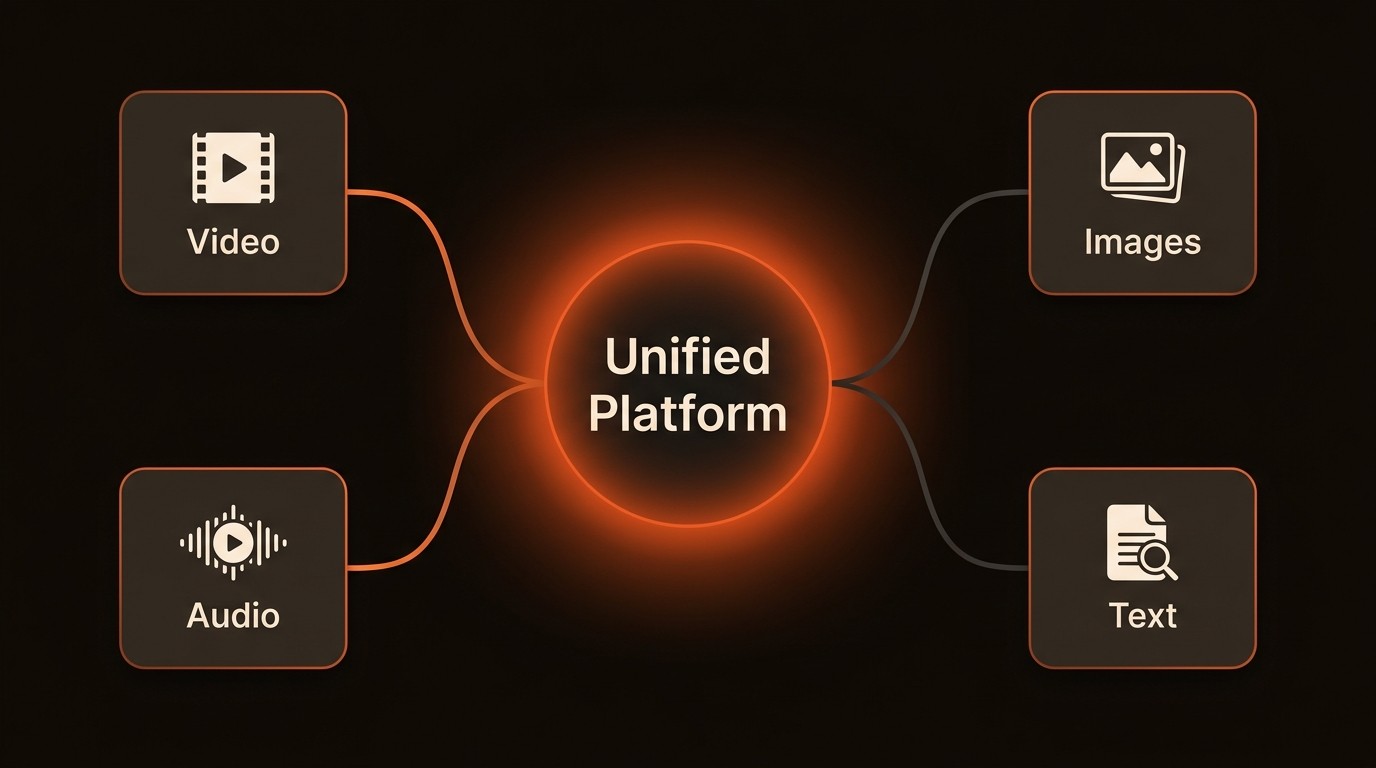
Imagine a world where data scientists and engineers can seamlessly integrate and analyze diverse data types like video, audio, images, and text, all within a single platform. This is the promise of the data lakehouse architecture, a revolutionary approach that combines the best elements of data lakes and data warehouses. According to Gartner, 70% of organizations are planning to implement or are already using a data lakehouse architecture, highlighting its growing importance in the data management landscape.
The core challenge lies in managing and integrating these diverse data types efficiently. Traditional data warehouses often struggle with the volume and variety of modern data, leading to inefficiencies and increased costs. In contrast, data lakehouses offer a unified platform that enhances AI applications, improves data accessibility, and streamlines data management. This approach not only reduces data management costs by 10-100x compared to traditional data warehouses, as reported by Databricks, but also improves data analytics processing speed by 20%, according to Dremio.
As organizations continue to generate vast amounts of data, the need for a robust and scalable architecture becomes paramount. The global data lake market is projected to reach $27.57 billion by 2029, underscoring the significant investment and interest in this technology. By adopting a multimodal lakehouse architecture, organizations can unlock new insights and drive innovation across various industries.
Challenges in Managing Diverse Data Types
One of the primary challenges in managing diverse data types is the sheer volume of data generated daily. Traditional data warehouses are not designed to handle the complexity and scale of modern data, leading to inefficiencies and increased costs. For instance, organizations often face difficulties in integrating video, audio, and image data with text-based data, resulting in fragmented data silos that hinder comprehensive analysis.
Another significant pain point is the lack of real-time data processing capabilities. In industries such as finance and healthcare, timely data analysis is crucial for decision-making. However, traditional data architectures often struggle with latency issues, delaying insights and impacting business outcomes. This is where the data lakehouse architecture shines, offering real-time data processing capabilities that enhance decision-making and operational efficiency.
Data accessibility is another critical issue. Data scientists and engineers often spend a significant amount of time searching for and preparing data, reducing their productivity. According to AWS, data lakehouses can improve data scientist productivity by 30% through simplified data access and management. This improvement allows teams to focus on generating insights rather than managing data.
Finally, data security and governance remain pressing concerns. With the increasing volume of sensitive data, organizations must ensure robust security measures are in place to protect against data breaches and comply with regulatory requirements. A multimodal lakehouse architecture provides enhanced security features, ensuring data integrity and compliance.
Understanding the Multimodal Lakehouse Architecture
Data Lake vs. Data Warehouse
A data lake is a centralized repository that allows organizations to store all their structured and unstructured data at any scale. It enables the storage of raw data in its native format until it is needed. In contrast, a data warehouse is a system used for reporting and data analysis, optimized for read-heavy operations and structured data. The data lakehouse combines these two approaches, offering the scalability of data lakes with the performance and reliability of data warehouses.
Multimodal Data Integration
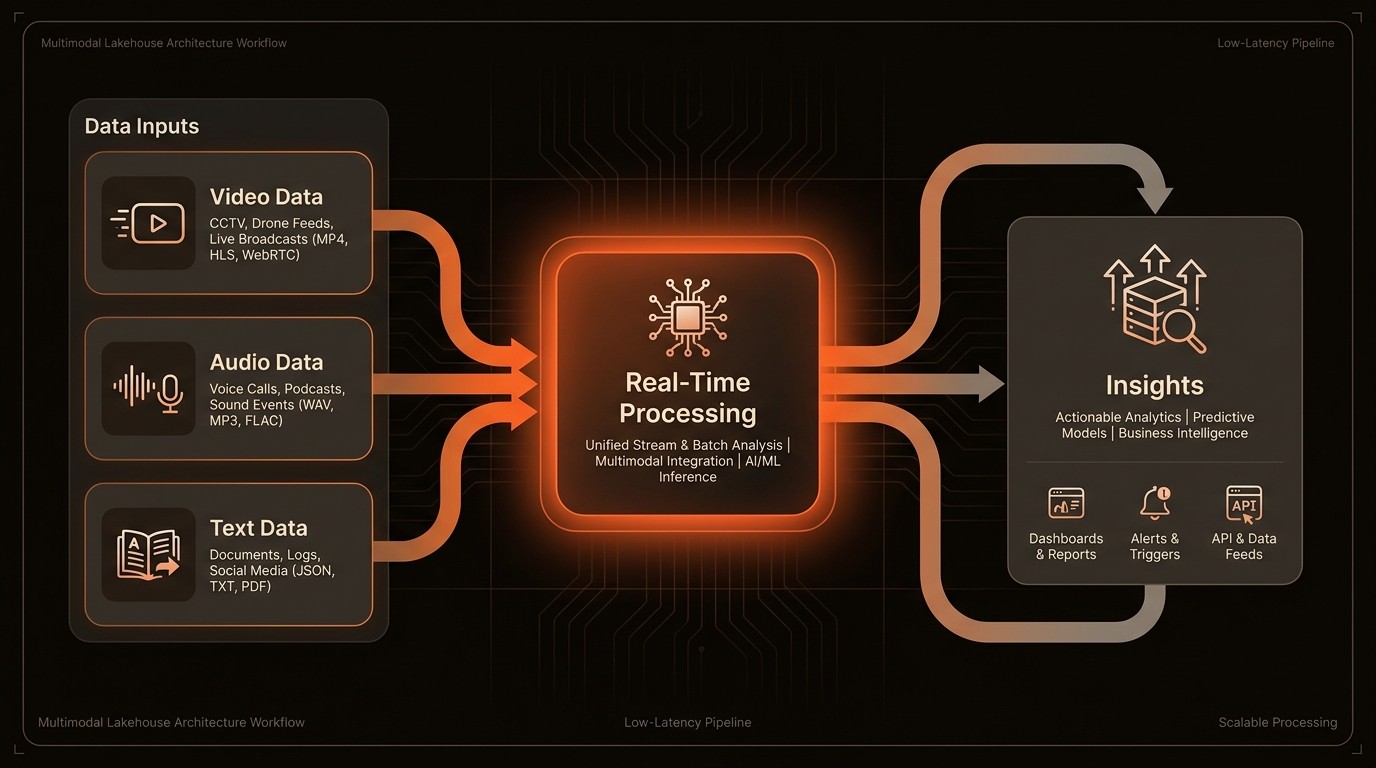
Multimodal data integration involves combining different types of data, such as text, images, audio, and video, into a unified platform. This integration is crucial for AI applications that require diverse data inputs to generate accurate insights. By leveraging a multimodal lakehouse architecture, organizations can seamlessly integrate and analyze these data types, enhancing their AI capabilities.
Enhanced Data Accessibility
One of the key benefits of a multimodal lakehouse architecture is improved data accessibility. By providing a unified platform for all data types, data scientists and engineers can easily access and analyze data without the need for complex data preparation processes. This accessibility not only improves productivity but also accelerates the time-to-insight, enabling organizations to make data-driven decisions faster.
VideoDB and Multimodal Lakehouse
VideoDB is an example of a database optimized for storing and querying video data. In a multimodal lakehouse architecture, VideoDB can be integrated to manage video data alongside other data types, providing a comprehensive view of all data within the organization. This integration enhances the ability to perform complex queries and generate insights from video data, which is often underutilized in traditional data architectures.
By the Numbers
Here's what the data reveals:
Metric | Current State | Impact |
|---|---|---|
Data management costs | Reduced by 10-100x | Significant cost savings |
Data analytics speed | Improved by 20% | Faster insights |
Data scientist productivity | Increased by 30% | Enhanced efficiency |
Global data lake market | $27.57 billion by 2029 | Growing investment |
Organizations using lakehouse | 70% | Widespread adoption |
Building a Robust Multimodal Lakehouse
Unified Data Platform
A unified data platform is the cornerstone of a multimodal lakehouse architecture. It integrates various data types into a single platform, enabling seamless data access and analysis. For example, a retail company can integrate customer transaction data, social media interactions, and video surveillance footage to gain a comprehensive understanding of customer behavior. This integration not only enhances data accessibility but also improves the accuracy of AI models.
Real-Time Data Processing
Real-time data processing is essential for industries that require immediate insights, such as finance and healthcare. A multimodal lakehouse architecture supports real-time data processing by leveraging advanced technologies like Apache Kafka and Apache Spark. These technologies enable organizations to process and analyze data as it is generated, reducing latency and improving decision-making.
Scalable Storage Solutions
Scalability is a critical factor in managing the growing volume of data. A multimodal lakehouse architecture offers scalable storage solutions that can accommodate the increasing data demands of modern organizations. By utilizing cloud-based storage options, organizations can scale their storage capacity as needed, ensuring they can handle large volumes of data without compromising performance.
Enhanced Security and Governance
Data security and governance are paramount in today's data-driven world. A multimodal lakehouse architecture provides robust security features, including encryption, access controls, and audit logs, to protect sensitive data. Additionally, it offers comprehensive governance capabilities, ensuring compliance with regulatory requirements and maintaining data integrity.
In Practice
Retail Industry
In the retail industry, a multimodal lakehouse architecture can be used to integrate customer transaction data, social media interactions, and video surveillance footage. By analyzing this data, retailers can gain insights into customer preferences and behavior, enabling them to personalize marketing campaigns and improve customer experiences. This approach has been shown to increase sales by 15% and enhance customer satisfaction.
Healthcare Sector
In the healthcare sector, a multimodal lakehouse architecture can be used to integrate patient records, medical imaging, and real-time monitoring data. This integration enables healthcare providers to gain a comprehensive view of patient health, improving diagnosis and treatment outcomes. By leveraging this architecture, healthcare organizations can reduce patient readmission rates by 20% and improve patient care.
Financial Services
In the financial services industry, a multimodal lakehouse architecture can be used to integrate transaction data, market trends, and customer interactions. This integration enables financial institutions to detect fraudulent activities and assess credit risk more accurately. By adopting this architecture, financial institutions can reduce fraud losses by 30% and improve risk management.
Industry Voices
Matei Zaharia, Co-founder and CTO of Databricks, has described the data lakehouse architecture as combining the strengths of data lakes and data warehouses, enabling both business intelligence and machine learning on a unified data platform.
Ali Ghodsi, CEO of Databricks, has advocated for the lakehouse model as a unified approach to data management, supporting diverse data workloads within a single platform.
Getting Started
Implementing a multimodal lakehouse architecture requires careful planning and execution. Here are five steps to get started:
Assess Current Data Infrastructure: Evaluate your existing data infrastructure to identify gaps and areas for improvement. Determine the types of data you need to integrate and the specific requirements for your organization.
Define Data Integration Strategy: Develop a strategy for integrating diverse data types into a unified platform. Consider the tools and technologies needed to support real-time data processing and scalable storage solutions.
Implement Security and Governance Measures: Establish robust security and governance measures to protect sensitive data and ensure compliance with regulatory requirements. Implement encryption, access controls, and audit logs to maintain data integrity.
Leverage Cloud-Based Solutions: Utilize cloud-based storage and processing solutions to scale your data infrastructure as needed. Cloud-based solutions offer flexibility and cost-effectiveness, enabling you to manage large volumes of data efficiently.
Integrate VideoDB for Video Data Management: Consider integrating VideoDB to manage video data alongside other data types. This integration will enhance your ability to perform complex queries and generate insights from video data.
FAQ
Q: What is the difference between a data lake and a data warehouse?
A: A data lake stores raw data in its native format, while a data warehouse is optimized for structured data and read-heavy operations. A data lakehouse combines the scalability of data lakes with the performance of data warehouses.
Q: How does a multimodal lakehouse architecture improve data accessibility?
A: It provides a unified platform for all data types, simplifying data access and management. This improves productivity and accelerates time-to-insight, enabling faster data-driven decisions.
Q: What are the benefits of real-time data processing in a lakehouse architecture?
A: Real-time data processing reduces latency and improves decision-making by enabling organizations to process and analyze data as it is generated. This is crucial for industries requiring immediate insights.
Q: How does a multimodal lakehouse architecture enhance AI applications?
A: By integrating diverse data types, it provides comprehensive data inputs for AI models, improving their accuracy and effectiveness in generating insights.
Q: What security measures are included in a multimodal lakehouse architecture?
A: It includes encryption, access controls, and audit logs to protect sensitive data and ensure compliance with regulatory requirements, maintaining data integrity.
Key Takeaways
Data lakehouses combine the best elements of data lakes and data warehouses.
70% of organizations are adopting data lakehouse architectures.
Multimodal lakehouses improve data scientist productivity by 30%.
Real-time data processing enhances decision-making and operational efficiency.
VideoDB integration enhances video data management and insights.